
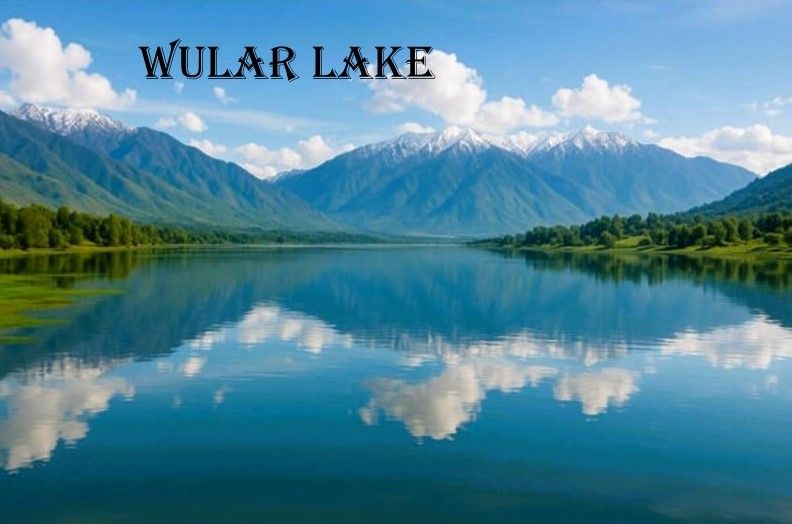
Nestled in the serene Bandipora district of Jammu and Kashmir, Wular Lake also spelled Wular is a breathtaking expanse of freshwater that holds the distinction of being the largest freshwater lake in India and among the largest in Asia. This balloon-shaped lake, with its dynamic surface area ranging seasonally from 30 to 260 square kilometers, is not just a geographical marvel but also a lifeline for the Kashmir Valley’s ecology, economy, and culture.
Etymology and Historical Significance
The Origins of Wular Lake name are steeped in ancient lore and linguistic evolution. According to the Nilamata Purana, it was once called Mahapadmasaras, a Sanskrit term. The renowned scholar Al-Biruni referred to it as Bolor in the 10th century. The lake’s afternoon waves, known for their ferocity, were described as Ullola in Sanskrit meaning stormy leaping of waves. Over time, Bolormorphed into Wular, possibly derived from the Kashmiri word Wul, meaning a gap or fissure, reflecting the lake’s tectonic origins.
Geography and Hydrography
Wular Lake stretches approximately 16 kilometers in length and 7.6 kilometers in breadth, with an average depth of 5.8 meters. It was formed due to tectonic activity and is surrounded by majestic mountain ranges, dense coniferous forests, and lush pastures. The River Jhelum enters the lake about 40 kilometers downstream from Srinagar and exits again, making Wular a crucial node in the region’s hydrological network. The lake is also fed by the Erin and Madhumati streams.
One of the lake’s most mysterious features is Mota Khon, or the “Gulf of Corpses,” believed to be its deepest section and shrouded in local legend for allegedly swallowing bodies.
Biodiversity: Birds and Aquatic Life
Wular Lake is a haven for terrestrial and aquatic biodiversity. Birdwatchers can spot species such as:
- Indian roller
- Eurasian sparrow hawk
- Hoopoe
- Chukar partridge
- Black-eared kite
- Koklass pheasant
- Rock dove
- Barn swallow
- Golden oriole
The lake’s waters teem with fish species like:
- Common carp (Cyprinus carpio)
- Rosy barb (Barbus conchonius)
- Nemacheilus species
- Crossocheilus latius
- Snowtrout species (Schizopyge and Schizothorax)
Fishing is a vital livelihood for locals, with endemic schizothorax and non-native carp making up about 60% of Kashmir’s total fish yield. Additionally, aquatic plants like Phragmites and Nymphoides are harvested for animal fodder.
Ecological and Socio-Economic Importance
Wular Lake plays a pivotal role in maintaining the hydrographic balance of the Kashmir Valley. It acts as a natural flood reservoir, absorbing excess water during monsoons. The surrounding marshes serve as habitats for diverse wildlife, and the lake itself is a critical fishery resource supporting thousands of families.
Recognizing its ecological value, the Indian government designated Wular as a wetland of national importance in 1986. In 1990, it gained international recognition as a Ramsar Site, underscoring its global environmental significance.
Zaina Lanka Island: A Historical Relic
Amidst Wular’s waters lies Zaina Lanka, an artificial island constructed in the 15th century by King Zain-ul-Abidin. Designed to offer refuge to boatmen during storms, the island now stands as a historical remnant, echoing the region’s rich cultural past.
Ecological Challenges
Despite its grandeur, Wular Lake faces several environmental threats:
- Conversion of catchment areas into agricultural land
- Unregulated discharge of chemical fertilizers and animal waste
- Overhunting of waterfowl and migratory birds
- Invasive weed infestation
These factors have led to a decline in water quality and biodiversity, prompting urgent conservation efforts.
Restoration Initiatives
To combat these challenges, Wular Lake was included among 26 Indian wetlands prioritized for conservation. Under the National Lake Conservation Programme, a massive restoration plan was launched, including the removal of 2 million trees to revive the lake’s ecosystem. The Indian Environment Ministry allocated ₹4 billion for this initiative, partnering with the South Asian Voluntary Association of Environmentalists (SAVE) to implement sustainable practices and ecological protection.
Tulbul Project: A Contested Endeavor
The Tulbul Project was conceived in the 1980s to regulate water release from Wular Lake, ensuring a minimum draught of 4.5 feet in the Jhelum River during winter. The plan involved constructing a navigation lock-cum-control structure with a storage capacity of 300,000 acre-feet.
However, the project was halted in 1987 due to objections from Pakistan, citing violations of the 1960 Indus Waters Treaty. India argued that the project was essential for navigation and regional development, but diplomatic tensions have kept the project in limbo.
Tourism and Recreation
Recognizing Wular Lake’s potential for tourism, the Government of India, in collaboration with Kerala and Jammu & Kashmir Tourism, launched boating and water sports like water skiing and rafting in 2011. These initiatives aim to boost local economies while promoting eco-tourism.
Visiting Wular Lake
Located about 50 kilometers from Srinagar, Wular Lake is easily accessible by bus. The best time to visit is between June and August, especially in the early morning when the lake’s beauty is at its peak. Whether you're a nature enthusiast, birdwatcher, or history buff, Wular Lake offers a tranquil escape into The Heart of Kashmir natural splendor.
Wular Lake stands as a testament to the delicate balance between nature and human activity. Its preservation is not just a regional concern but a global imperative, reminding us of the profound interconnection between ecology, culture, and community.