
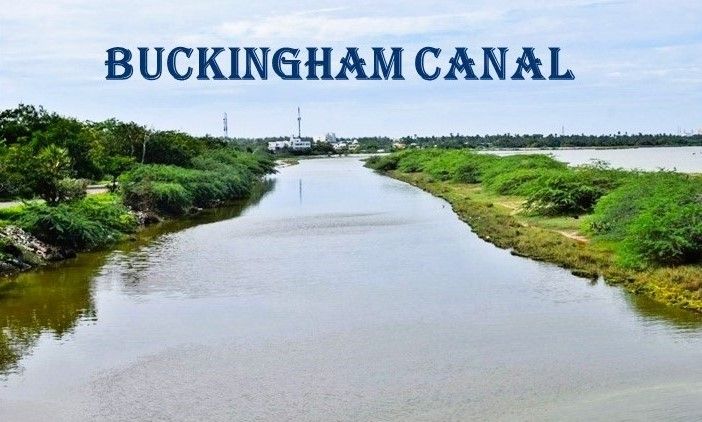
The Buckingham Canal, stretching nearly 796 kilometers along the Coromandel Coast, has historically served as more than just a navigation route. Its strategic location and ecological features have made it a crucial buffer during natural disasters. From the 2004 Indian Ocean tsunami to the 2015 Chennai floods, the canal has played a significant role in mitigating damage, saving lives, and supporting recovery efforts.
The Canal’s Role During the 2004 Tsunami
On December 26, 2004, The Indian Ocean Tsunami struck coastal regions of South India, causing widespread devastation. The Buckingham Canal acted as a safeguard zone, regulating the force of the tsunami waves over nearly 310 km from Pedda Ganjam in Andhra Pradesh to Chennai.
- The canal absorbed and contained much of the incoming water, which poured out at certain points but retreated back to the sea within 10 to 15 minutes.
- This rapid retreat prevented prolonged flooding and reduced the destruction of coastal settlements.
- Importantly, the canal’s presence helped save the lives of numerous fishermen in Andhra Pradesh and parts of Chennai, who otherwise would have faced the full brunt of the waves.
- The canal also assisted in clearing aquaculture remains, reducing the spread of debris and pollutants.
Another factor that lessened the tsunami’s impact was the natural vegetation along both sides of the canal. Mangroves, shrubs, and other plant growth acted as barriers, slowing down the waves and protecting inland areas. This highlights the ecological importance of maintaining vegetation along waterways.
The Canal During the 2015 Chennai Floods
In December 2015, Chennai experienced one of its worst floods in recent history. Torrential rains overwhelmed the city’s drainage systems, submerging neighborhoods and disrupting daily life. During this disaster, the Buckingham Canal played a critical role in draining floodwater from South Chennai.
However, a 2014 Comptroller and Auditor General (CAG) report had already warned that poor planning and lack of flood control projects limited the canal’s effectiveness. According to the report, with proper infrastructure, the canal could have drained water at a rate of 3,500 cubic feet per second from southern neighborhoods. This would have significantly reduced the extent of flooding and damage.
Despite its potential, encroachments, pollution, and siltation restricted the canal’s capacity. While it did provide relief by channeling excess water, its diminished state prevented it from functioning at full efficiency.
Lessons from the Canal’s Disaster Role
The Buckingham Canal’s performance during these disasters underscores several key lessons:
- Natural Infrastructure Matters: Vegetation along waterways acts as a natural defense against floods and tsunamis.
- Maintenance is Crucial: Without regular dredging, cleaning, and pollution control, canals lose their capacity to manage water flow.
- Urban Planning Integration: The canal must be integrated into Chennai’s flood management systems to maximize its potential.
- Community Protection: For fishing and farming communities along the coast, the canal remains a lifeline during emergencies.
Conclusion
The role of Buckingham Canal during disastersdemonstrates its enduring importance as both a natural safeguard and a man-made infrastructure. In 2004, it Absorbed Tsunami Waves and saved countless lives, while in 2015, it drained floodwaters and offered partial relief to Chennai’s residents. Yet, its declining condition due to pollution and encroachment limits its effectiveness. Reviving and maintaining the canal could transform it into a powerful tool for disaster resilience, ecological balance, and community protectionalong South India’s vulnerable coastline.