
Introduction
Tiruvallur District, nestled in the northeastern part of Tamil Nadu, came into existence on 1st January 1997 following the bifurcation of the erstwhile Chengalpattu District. The name "Tiruvallur" is derived from the Tamil phrase “Tiru evvull?”, meaning “Where shall I sleep?”, a reference to the sleeping posture of Lord Vishnu in the revered Veeraragava Temple. Over time, the district has been referred to by various names including Trivellore and Tiruvallur. Today, it stands as a vibrant blend of cultural heritage, administrative significance, and economic development.
History of Tiruvallur District
The Historical Roots of Tiruvallur trace back to ancient dynasties that ruled South India. The region was initially under the dominion of the Pallavas in the 7th century, followed by the Cholas, Vijayanagar Empire, and later the Nawabs of Arcot. In 1687, the defeat of the Golkonda rulers brought the area under the Mughal Empire. The district also witnessed the Carnatic Wars, a series of military conflicts between the British and French forces vying for supremacy in South India. Pulicat, a town in the district, was the earliest Dutch possession in India, established in 1609 and ceded to the British in 18252.
The formation of Tiruvallur District in 1997 marked a significant administrative reorganization. It included taluks such as Tiruvallur, Tiruttani, Uthukkottai, Pallipattu, Ponneri, and Gummidipoondi, previously part of Chengalpattu and Saidapet revenue divisions.
Administration of Tiruvallur District
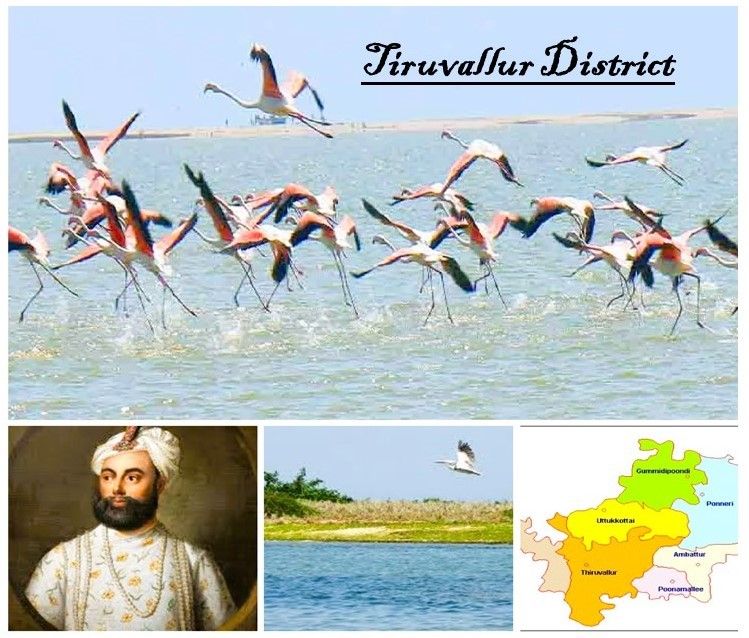
Tiruvallur District is administratively divided into three revenue divisions: Tiruvallur, Tiruttani, and Ponneri. These divisions encompass a total of nine taluks Avadi, RK Pet, Ponneri, Gummidipoondi, Uthukottai, Tiruvallur, Poonamallee, Tiruttani, and Pallipattu. The district comprises 46 firkas and 820 revenue villages, along with 12 blocks, five municipalities, and ten town panchayats that oversee rural development activities.
The district headquarters is located in Tiruvallur town, which has evolved into a fast-developing urban center. The administration is headed by a District Collector, supported by various departmental officers managing sectors like revenue, education, health, agriculture, and rural development.
Demography of Tiruvallur District
According to the 2011 Census, Tiruvallur District had a population of approximately 3.73 million, with a sex ratio of 987 females for every 1,000 males. The district exhibits a mix of urban and rural characteristics. The eastern part, closer to Chennai, is more urbanized, while the northern region reflects influences from neighboring Andhra Pradesh, both culturally and linguistically.
The district is home to diverse communities and languages, with Tamil being the predominant language. The literacy rate is relatively high, reflecting the district’s emphasis on education and development. The population density and growth have been influenced by industrialization and proximity to Chennai, leading to increased migration and urban expansion.
Education in Tiruvallur District
Education in Tiruvallur District has seen significant progress over the years. The district hosts a range of educational institutions, from primary schools to colleges offering higher education in arts, science, engineering, and technology. Government and private schools are spread across urban and rural areas, ensuring access to basic education.
Several engineering colleges, polytechnic institutes, and vocational training centers cater to the growing demand for technical education. The district also benefits from proximity to Chennai, allowing students access to premier institutions and research centers. Initiatives under the Sarva Shiksha Abhiyan and other government schemes have further boosted enrollment and infrastructure in schools.
Tourism in Tiruvallur District
Tiruvallur District is a treasure trove for travelers seeking spiritual, historical, and ecological experiences. The most iconic landmark is the Veeraragava Temple, dedicated to Lord Vishnu, located in Tiruvallur town. The temple is renowned for its architectural grandeur and spiritual significance, especially on Amavasya (new moon day), considered auspicious for devotees.
Other notable attractions include:
- Pulicat Lake and Bird Sanctuary: A haven for bird watchers, this brackish water lake attracts migratory birds including flamingos and pelicans.
- Tiruttani Murugan Temple: One of the six abodes of Lord Murugan, perched atop a hill and drawing devotees from across the region.
- Poondi Reservoir: A scenic spot ideal for picnics and nature walks, also serving as a major water source for Chennai.
- Dutch Cemetery in Pulicat: A historical site reflecting the colonial past of the region.
The district’s proximity to Chennai makes it a convenient weekend getaway for tourists. Its Blend of Temples, lakes, and historical sites offers a rich tapestry of experiences.
Tiruvallur District stands as a dynamic region that bridges Tamil Nadu’s rich past with its progressive present. From its spiritual roots in the Veeraragava Temple to its administrative evolution and educational strides, Tiruvallur continues to grow as a vital district in the state. Whether you're a history enthusiast, a pilgrim, or a traveler seeking tranquility, Tiruvallur offers a compelling journey through time and tradition.