
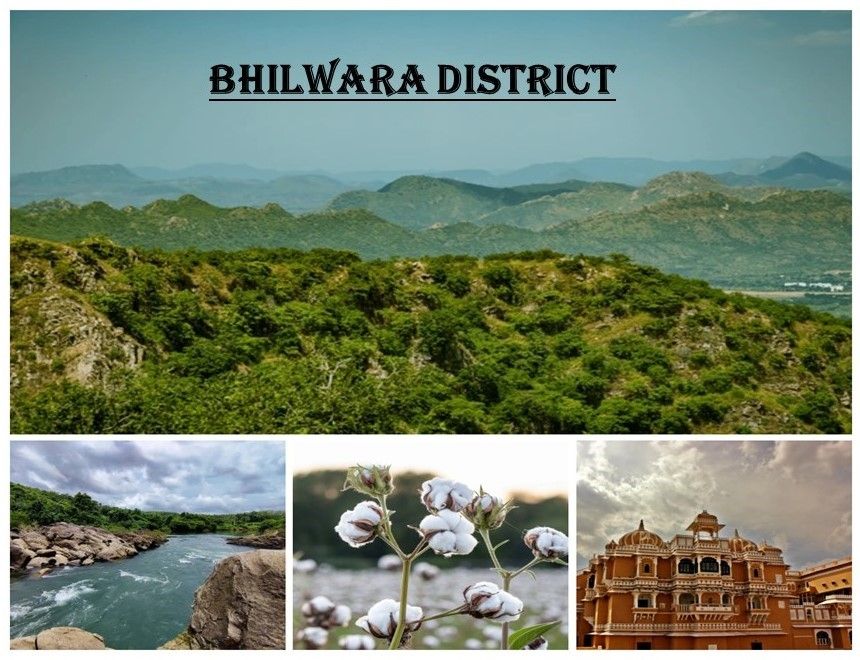
Bhilwara, nestled in southeastern Rajasthan, is a district where industrial vigor meets cultural depth. Renowned as the “Textile City of India” and the “Manchester of Rajasthan,” Bhilwara is not just a manufacturing hub it’s a region steeped in history, artistic heritage, and natural beauty.
Location and Connectivity
Situated approximately 260 km southwest of Jaipur, Bhilwara enjoys excellent connectivity through state highways and broad-gauge railway lines, linking it to major cities like Ajmer, Udaipur, and Chittorgarh. The nearest airport is in Udaipur, about 171 km away, facilitating both industrial and tourist movement. This robust infrastructure has played a pivotal role in Bhilwara’s emergence as a textile and mineral center.
Historical Roots
The name Bhilwara is believed to derive from the Bhil tribe, early settlers who shaped the region’s identity. Another theory attributes the name to ‘Bhiladi’ coins once minted locally. Archaeological discoveries, including Stone Age tools dating back over 200,000 years, suggest Bhilwara is among the oldest inhabited regions in Rajasthan.
Historically, Bhilwara was ruled by the Guhil and Chouhan dynasties, later becoming part of the Mewar kingdomduring the Mughal era. Shahpuraemerged as a key administrative center, and towns like Mandalgarh still showcase a blend of Rajput and Mughal architecture, reflecting the district’s layered past.
Geography and Terrain
Covering 10,508 square kilometers at an elevation of 421 meters, Bhilwara is bordered by Ajmer, Bundi, Chittorgarh, Madhya Pradesh, and Rajsamand. The terrain is semi-arid, with a mix of hills and plains that support both agriculture and mining. The Banas and Bedach rivers enrich the soil, making the region fertile and conducive to diverse economic activities.
Administrative Structure
Bhilwara comprises 16 tehsils, including Asind, Banera, Mandal, Mandalgarh, and Shahpura. The district headquarters in Bhilwara cityoversees seven sub-divisions and 1,783 villages. Governance is managed through Panchayat Samitis and municipal bodies, ensuring smooth administration across urban and rural zones.
Economic Landscape
Bhilwara’s economy thrives on a triad of agriculture, mining, and textiles. The textile industry began in 1938 with the establishment of Mewar Textile Mills. Today, the district boasts over 850 manufacturing units producing synthetic yarn, suiting fabrics, and cotton textiles, exported globally and cementing Bhilwara’s reputation as a textile powerhouse.
The district is also rich in mineral resources, notably the Rampura-Agucha mines, which hold one of India’s largest lead-zinc reserves. Other minerals include mica, copper ore, soapstone, clay, quartz, feldspar, garnet, dolomite, calcite, limestone, silica sand, marble, granite, and sandstone, making Bhilwara a significant player in India’s mining sector.
Education and Literacy
Bhilwara has made notable strides in education. It hosts a variety of government and private schools, along with colleges offering courses in arts, science, commerce, engineering, and management. The district’s literacy rate stands at 62.71%, with ongoing efforts to improve rural education and bridge the urban-rural divide.
Tourism and Cultural Attractions
Though not a mainstream tourist hotspot, Bhilwara offers a rich tapestry of experiences:
- Shahpura: Spiritual center of the Ramsnehi Sampraday, home to Ramdwara and Ram Niwas Dham.
- Mandalgarh: Historic town with a Watchtower-Turned-Devi temple and Mughal-era architecture.
- Asind: Known for its scenic beauty and cultural heritage.
- Harni Mahadev Temple: A serene Shiva temple nestled in the hills.
- Pur Udan Chatri: A geological marvel featuring a massive rock balanced on a smaller one.
Other notable sites include Badnore Fort, Battis Khambon ki Chhatri, and Kyara ke Balaji, where a naturally formed image of Lord Hanumandraws pilgrims and tourists alike.
Bhilwara also nurtures traditional arts like Phad painting, Bahrupiya performances, Swang theatre, and folk music. Institutions such as the Sangeet Kala Kendra play a vital role in preserving these cultural treasures.
Agriculture and Rural Life
Despite its industrial growth, Bhilwara retains a strong agricultural backbone. Major crops include wheat, barley, maize, pulses, and oilseeds. The rural economy is bolstered by irrigation projects, cooperative societies, and agro-based industries, providing livelihoods to a significant portion of the population. This balance between agriculture and industry reflects Bhilwara’s holistic development model.
Mughal Legacy and Shahpura’s Role
During the Mughal period, Bhilwara was part of the Mewar kingdom, with Shahpuraserving as a vital administrative node. While there’s no direct evidence of Emperor Shah Jahan residing here, the Mughal influence is evident in the architecture and cultural practices of towns like Mandalgarh and Shahpura.
Conclusion
Bhilwara District exemplifies the harmonious coexistence of tradition and modernity. From its globally recognized textile mills and mineral-rich landscapes to Its Ancient Temples and vibrant Folk Arts, Bhilwara offers a multifaceted experience. Whether you're a traveler seeking offbeat destinations or an entrepreneur exploring industrial opportunities, Bhilwara stands as a testament to Rajasthan’s resilient and resourceful spirit.