
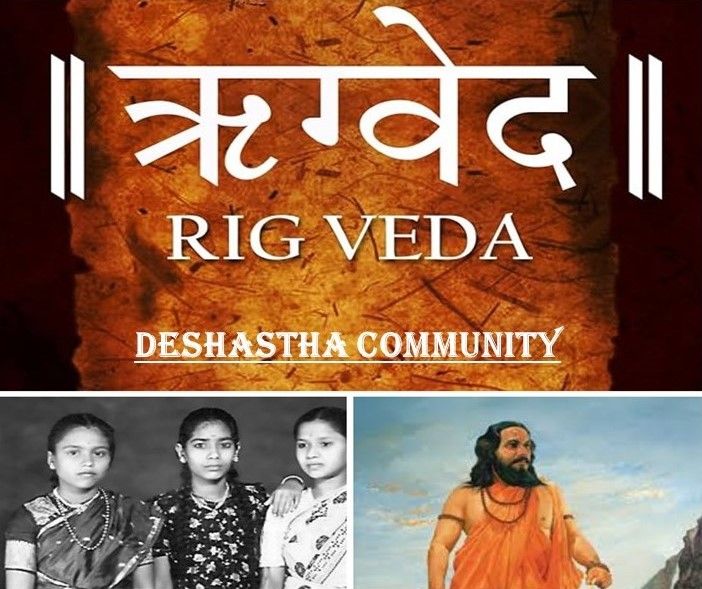
The valleys of the Krishna and Godavari rivers, along with the Sahyadri plateau, form a region historically known as Desha. From this land emerged the Deshastha Brahmins, one of the oldest Brahmin communities in India, whose roots trace back to Vedic times. References in Ancient Scriptures highlight groups resembling the Deshasthas, underscoring their enduring lineage and cultural significance.
Origins and Settlement
Spread widely across the Deccan region particularly in Maharashtra, Karnataka, and Andhra Pradesh the Deshasthas have long been recognized for their devotion, industrious nature, and ritualistic practices. Their reputation for honesty and reliability often placed them in positions of administrative and scholarly responsibility. Over centuries, they became integral to India’s spiritual, political, and intellectual life.
Rigvedis and Yajurvedis
The community is divided into two major sects:
- Rigvedis: Followers of the Rig Veda.
- Yajurvedis: Followers of the Yajur Veda.
Though their rituals are largely similar, a key distinction exists among Yajurvedis—marriage between a boy and his maternal uncle’s daughter is prohibited, a restriction absent among Rigvedis. This subtle difference reflects the diversity within their shared traditions.
Physical and Cultural Traits
Deshastha Brahmins are often described as having a sturdy build, high foreheads, and darker complexions. Beyond physical traits, they are admired for their intelligence, courtesy, honesty, and hospitality. Deeply religious, they live ethically and peacefully, embodying values of trust and devotion. Many saints and philosophers from Maharashtra, Karnataka, and Andhra Pradesh hailed from this community, enriching India’s spiritual and cultural heritage.
Surnames and Identity
Their surnames carry historical and cultural significance:
- Administrative titles: Kulkarni, Deshpande, Patil, Deshmukh.
- Personal traits: Hirve, Buddhisagar.
- Place-based names: In Maharashtra, surnames often end with kar (e.g., Mangalvedhekar, Gajendragadkar, Junnarkar). In Karnataka and Andhra Pradesh, names like Gokak and Bewur are common.
These surnames reflect their roles in governance, scholarship, and community life.
Religious Practices and Deities
Each family worships a kuladevata(family deity), believed to safeguard their well-being. Villages honor gramadevatas, whose displeasure is thought to bring calamities. Prominent deities include Narasimha, Shiva, Vishnu, Rama, Hanuman, and Vyankatesa, alongside revered goddesses such as Bhavani of Tuljapur, Ambabai of Kolhapur, and Yamai of Aundha. In Karnataka and Andhra, deities like Krishna of Udipi, Vyankatesa of Tirupati, and Banashankari hold special importance.
Festivals and Rituals
Navaratri is the most celebrated festival among Deshasthas. Devotees fast, recite hymns from the Durga Saptashati, and make offerings to fire. Rituals include inviting a virgin and a married woman to festive meals. Other Navaratris, such as Champashashthi and Narasimha Navaratri, are also observed.
Marriage ceremonies traditionally lasted several days, with regional variations. In Maharashtra, the bride’s family serves karhi bhat (rice with curd curry), while in Karnataka, elaborate sweets are offered. Rituals like kanyadan, lajahoma, and saptapadi are performed with precision, reflecting their devotion to tradition.
Saints, Philosophers, and Contributions
The Deshasthas have produced eminent saints and acharyas who spread Vedic and Advaita teachings. The Mahanubhava cult, founded by Chakradhar, gave Marathi its first literary work, Leela Charitra. Saints like Dhyanesvara, Eknath, and Ramdasa enriched Marathi spirituality and literature, while the Dasa cult in Karnataka emphasized Bhakti through saints like Purandaradasa and Vijayadasa.
Their intellectual contributions are equally remarkable. Bhaskar II, a 12th-century mathematician, made pioneering advances. Philosophers like Yajnavalkya, Vasishtha, and Bharadvaja are linked to this community. In Sanskrit literature, Bhavabhuti stands second only to Kalidasa in dramatic genius, with Malati Madhava as his masterpiece.
Legacy
The Deshastha Brahmin community has played a vital role in shaping India’s cultural, spiritual, and intellectual heritage. From saints and philosophers to mathematicians and administrators, their contributions span centuries. Deeply Rooted in Tradition yet influential in diverse fields, the Deshasthas remain custodians of India’s rich legacy of faith, knowledge, and culture.