
Introduction
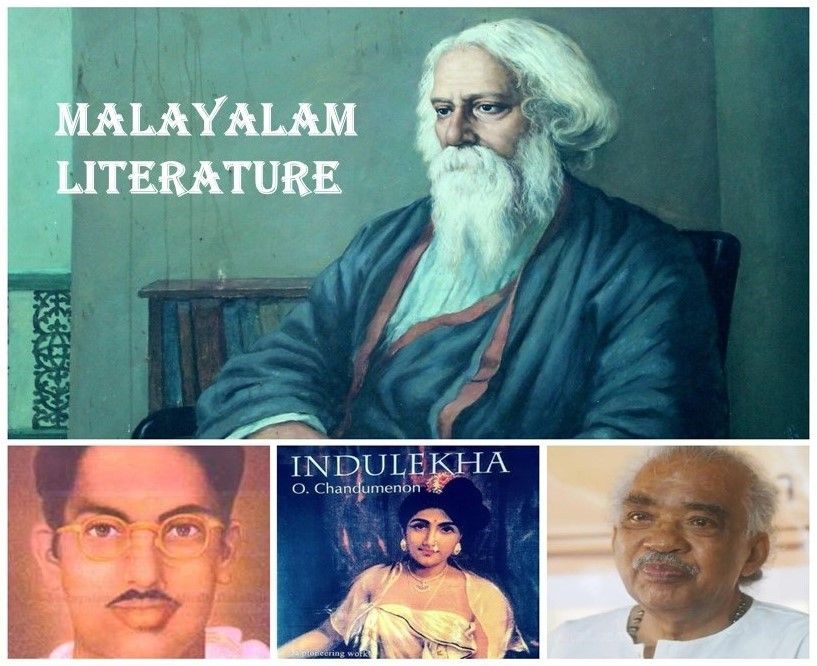
The development of the novel in Malayalam literature was made possible by the emergence of an independent class of readers and writers in Kerala during the late nineteenth century. This new social group, shaped by modern education and exposure to Western literary traditions, created fertile ground for prose fiction. Appu Nedungadi’s Kundalatha(1887) is often regarded as the first original novel in Malayalam, but it was Chandu Menon’s Indulekha (1889) that truly marked the beginning of a significant literary tradition.
Early Foundations: Chandu Menon’s Indulekha
Indulekha was groundbreaking in its depiction of social change. Chandu Menon initially attempted to translate Benjamin Disraeli’s Henrietta Temple into Malayalam but abandoned the project due to cultural incompatibility. Instead, he crafted a narrative rooted in Kerala’s social realities. The novel dramatizes the resistance of Indulekha, a progressive and educated woman, against feudal oppression and caste-based exploitation. By portraying the decline of Brahminical dominance and the rise of an educated middle class, Indulekha set the tone for Future Malayalam Novels. It was not merely a literary experiment but a cultural intervention that challenged entrenched social evils such as polygamy and caste discrimination.
Historical Novels and C. V. Raman Pillai
The second major figure in the evolution of the Malayalam novel was C. V. Raman Pillai. Inspired by Walter Scott, he produced historical romances that combined grand narratives with realistic characters. His Marthanda Varma (1891) and Dharmaraja (1911) explored the Travancore dynasty, weaving together themes of loyalty, betrayal, and resistance to imperialism. These novels not only entertained but also reconstructed Kerala’s historical consciousness. In Dharmaraja, the conspiracy of exiled enemies against the throne and the valor of Kesava Pillai reflect both political intrigue and human drama. Raman Pillai’s works demonstrated that the novel could serve as a vehicle for historical imagination as well as social critique.
Expansion of the Genre
Following Raman Pillai, several writers enriched the Malayalam novel with diverse themes. Pallath Raman’s Amrita Pulinam, Appan Thampuran’s Bhoota Rayar, and Bhaskara Menon’s detective fiction expanded the scope of the genre. Sardar K. M. Panikkar’s Paranki Padayaliand Kerala Simham explored Kerala’s encounters with colonial powers, blending history with nationalist sentiment. These works collectively established the novel as a central literary form in Malayalam, capable of addressing both contemporary issues and historical memory.
Influence of Translations
Translations played a crucial role in elevating the novel’s stature. Nalappat’s Malayalam version of Victor Hugo’s Les Miserables introduced readers to global literary traditions. Works of Dostoevsky, Tolstoy, Hardy, Gorky, and Tagore were also translated, enriching Malayalam literature with new narrative techniques and philosophical depth. These translations bridged local and global sensibilities, strengthening the credibility of the novel as a serious art form.
Progressive Writers and Modern Realism
By the 1930s, Malayalam literature witnessed the rise of the Progressive Writers’ Movement, influenced by Marxist aesthetics and Western humanist traditions. Critics such as Kesari Balakrishna Pillai, M. P. Paul, and Joseph Muntasseri theorized the role of literature in shaping social consciousness. Realistic fiction became the dominant mode, focusing on class struggles, social justice, and individual experiences. This marked a decisive shift from romantic and historical narratives to socially committed literature.
Conclusion
The development of the novel in Malayalam literature reflects Kerala’s cultural transformation from feudalism to modernity. Beginning with Indulekhaand enriched by historical romances, detective fiction, translations, and progressive realism, the Malayalam novel evolved into a powerful medium of social critique and cultural expression. Today, it stands as a testament to the dynamic interplay between tradition and modernity, local realities and global influences.