
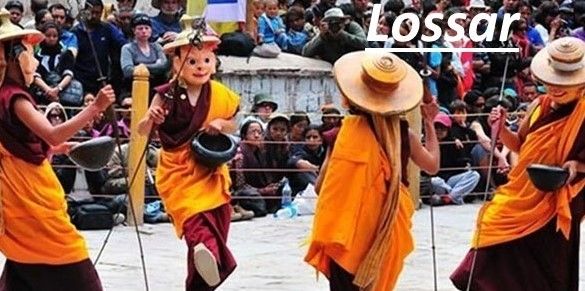
The festival of Lossar, celebrated as the Tibetan New Year, is one of the most significant cultural and spiritual occasions for Tibetans and Buddhist communities across the Himalayan belt. Observed with grandeur in regions such as Ladakh, Sikkim, Arunachal Pradesh, and Himachal Pradesh’s Lahaul, it marks not only the transition of seasons but also a profound renewal of faith, identity, and communal harmony.
Origins of Lossar
The roots of Lossar trace back to Tibet’s pre-Buddhist Bon traditions, where winter rituals were performed to appease local deities with incense offerings. Over time, these practices merged with Buddhist philosophy, giving rise to The Structured Festival Celebratedtoday.
- King Pude Gungyal: Tibet’s ninth king is credited with formalizing the festival.
- Belma’s lunar calendar: A legend attributes its origin to an old woman who introduced lunar time measurement during apricot blossom season in Tibet’s Lhokha Yarla Shampo region.
- Civilizational milestones: Lossar also commemorates advancements in irrigation, metallurgy, cultivation, and bridge construction. With the introduction of astrology based on the five elements, agricultural ceremonies evolved into a spiritual New Year celebration.
Timing and Duration
Lossar is observed in the first month of the Tibetan calendar, usually between mid-November and early December. The festival lasts 15 days, with the first three being the most significant:
- First Day: Families prepare changkol, a beverage made from chhaang, a Tibetan cousin of beer.
- Second Day: Known as Gyalpo Lossar or King’s Lossar, it honors leadership and community.
- Preparatory Rituals: Five days of Vajrakilaya practice precede the festival, involving prayers and spiritual cleansing.
Though it sometimes coincides with the Chinese New Year, Lossar remains distinct, sharing closer ties with the Mongolian Tsagaan Sar.
Rituals and Celebrations
Lossar is A Vibrant Blend of Spirituality and Festivity. Monasteries and homes are decorated, offerings are made to deities, and ritual dances bring Buddhist teachings to life.
- Monastic rituals: Monks perform chants, masked dances, and symbolic performances.
- Community celebrations: Beyond Tibet, Bhutanese and Nepalese groups like the Tamang, Sherpa, and Gurung observe Lossar, often calculating age by counting Lho.
- Tribal observances: In Arunachal Pradesh, the Monpa tribe of Tawang and the Memba of Mechukha valley celebrate, with the latter marking it a month earlier.
Cultural Significance
Lossar is far more than a New Year festival—it is a reaffirmation of cultural identity, spiritual devotion, and communal unity.
- Renewal rituals: The ceremonies symbolize gratitude toward ancestors, harmony with nature, and spiritual cleansing.
- Integration of Buddhism: By blending Buddhist teachings with everyday life, Lossar strengthens the bond between spirituality and community.
- Indian Himalayan celebrations: In Sikkim, Arunachal Pradesh, Himachal Pradesh, and Ladakh, the festival highlights the diversity of Buddhist traditions while reinforcing unity among communities.
Conclusion
The Festival of Lossar stands as a living testament to the resilience and richness of Tibetan culture. Rooted in ancient Bon traditions and shaped by Buddhist philosophy, it continues to thrive across borders, bringing people together in prayer, dance, and festivity. As the Tibetan New Year, Lossar is not merely a marker of time but a celebration of heritage, spirituality, and the enduring bond between humanity and the divine.