
Introduction
The Taj Mahal in Agra, Uttar Pradesh, is celebrated worldwide as a symbol of love and one of the greatest achievements of Mughal architecture. While its marble dome is the most iconic feature, the monument’s grandeur begins at its main gateway, known as the Darwaza-i-Rauza. Built between 1632 and 1638, this gateway sets the tone for the breathtaking experience that awaits visitors. Alongside the gateway, the sculpture and artistry of the Taj Mahal reflect a rare fusion of styles, materials, and emotions, making it a timeless wonder.
The Main Gateway of the Taj Mahal
The Darwaza-i-Rauza was designed by Ustad Ahmad Lahauri, The Chief Architect of the Taj Mahal, as confirmed by the writings of his son, Lutfullah Munhadis. Standing 93 feet high and 150 feet wide, the double-storey gateway is constructed in red sandstone. Its doorway is shaped in an ogival arch, reaching midway up the structure, symbolizing the passage from the material world into the divine.
At each corner of the gateway are octagonal towers crowned with open-domed pavilions. Above the central portion, eleven umbrella-shaped marble cupolas add elegance. Inside the archway lies a large decorated chamber with twisting hallways and side branches, believed to have been designed to confuse intruders. Though unused for centuries, these chambers add mystery to the gateway’s design.
The gateway is richly adorned with Arabic calligraphy from the Holy Quran, along with motifs of entwined flowers, leaves, and vines inlaid with semi-precious stones. As visitors pass through, the arch spreads out like welcoming arms. Hindu motifs, such as the red lotus symbolizing Lord Brahma, further highlight the cultural synthesis of Mughal art.
Sculpture of the Taj Mahal
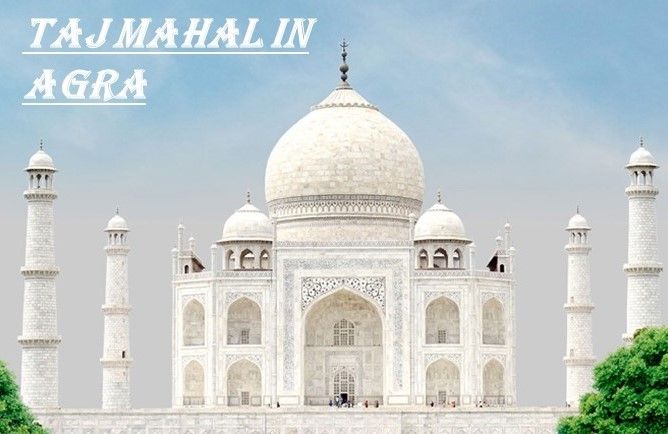
The sculpture of the Taj Mahal is awe-inspiring, especially when viewed up close. The central dome towers skyward at 244 feet, taller than Delhi’s Qutub Minar. Though delicate in appearance, the dome is robust, with walls 14 feet thick. Surrounding it are four smaller cupolas, each with an inner diameter of nearly 30 feet.
Domes hold spiritual significance in both Islamic and Hindu traditions, believed to channel celestial energy. Standing beneath the dome in silence is said to bring clarity and peace. The Taj Mahal’s dome, with its harmonious proportions, embodies this mystical aura.
Interestingly, the monument’s lower floors are built of red sandstone, while the upper four are clad in marble. Two identical buildings flank the Taj Mahal—the mosque to the west and a community hall to the east—adding symmetry to the complex.
Jewels and Marble Craftsmanship
The Taj Mahal’s sculpture is enriched with gemstones sourced from across the world. Jasper from Punjab, diamonds from Patna, garnets from Bundelkhand, turquoise from Tibet, and lapis lazuli from Ceylon were among the many used. Semi-precious stones were inlaid into marble to create floral patterns of breathtaking beauty.
The finest white marble from Makrana was used extensively, alongside yellow marble from the Narmada and black marble from Charkoh. The play of sunlight on these surfaces creates a mesmerizing spectacle, with hues shifting from grey and rose to gold and silver throughout the day.
Optical Illusions and Filigree
The Taj Mahal’s architects employed subtle optical illusions to enhance its beauty. The plinth of each arch was deliberately given a convexity, making the monument appear perfectly upright. Delicate lattice frames, or jali, screen the tomb, showcasing intricate filigree work that astonishes visitors with its precision.
Conclusion
The Main Gateway and Sculpture of the Taj Mahal embody the monument’s grandeur and spiritual depth. The gateway symbolizes the transition from earthly life to divine eternity, while the sculpture reflects harmony, devotion, and artistic brilliance. Together, they make the Taj Mahal not just a monument of love, but a timeless masterpiece of human creativity and emotion.