
Introduction
The Godavari River, often called the “Ganga of the South,” is one of the most sacred rivers in India. Stretching for 1,465 kilometers, it is the second longest river in the country after the Ganga and the longest in southern India. Originating near Trimbak in Nashik district of Maharashtra, the river flows eastward across the Deccan Plateau before emptying into the Bay of Bengal near Yanam and Antarvedi in Andhra Pradesh. Beyond its geographical importance, The Godavari holds Immense Spiritual and cultural significance, deeply embedded in Indian traditions, rituals, and mythology.
Sacred Status of the River
In India, rivers are revered as goddesses and worshipped as divine entities. The Godavari is no exception. According to the Puranas, pilgrims should first visit the Godavari before proceeding to the Ganga, underscoring its sanctity. Numerous pilgrimage sites line its banks, making it a spiritual lifeline for millions.
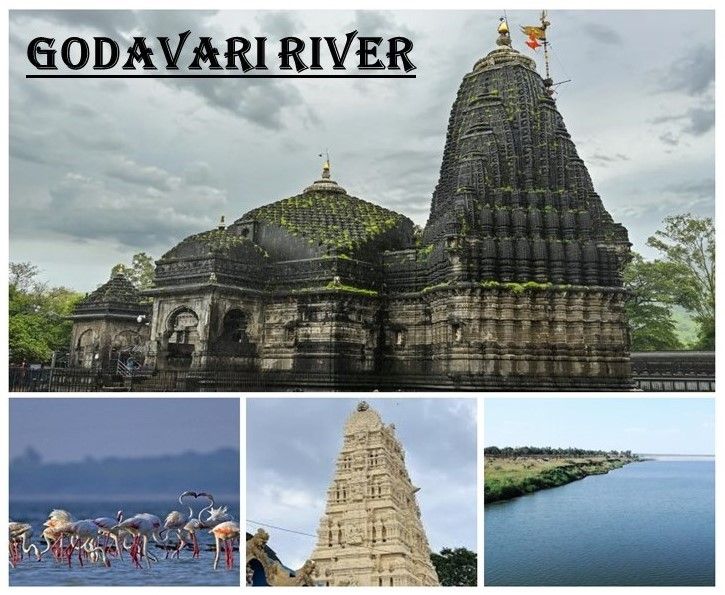
- Trimbakeshwar Temple: Located at the river’s origin, this ancient temple dedicated to Lord Shiva is one of the twelve Jyotirlingas. It is considered the most important Jyotirlinga, attracting devotees from across the country.
- Nanded Takht Sri Hazur Sahib: A revered Sikh shrine, it is among the five Takhts of Sikhism and holds immense religious importance.
- Bhadrachalam Temple: Dedicated to Lord Rama, this temple in Telangana is a major pilgrimage destination on the banks of the Godavari.
Festivals and Rituals
The Godavari is central to several religious festivals. The most prominent is the Godavari Pushkaram, held once every twelve years. During this festival, millions of devotees take a holy dip in the river, believing it cleanses them of sins and grants spiritual merit. Historical figures such as Baladeva(5000 years ago) and Chaitanya Mahaprabhu (500 years ago) are said to have bathed in its waters, further elevating its sanctity.
Legends Associated with the Godavari
The river’s origin and holiness are explained through rich mythological narratives:
- Sister of Ganga: Mythology describes the Godavari as the sister of the Ganga, both believed to have originated from the “jata” (locks) of Lord Shiva during his meditation on Mount Kailash.
- Sage Gautama’s Redemption: One of the most famous legends involves Sage Gautama, who accidentally killed a cow, considered sacred in Hinduism. To atone for this sin, he prayed to Lord Shiva, who diverted the Ganga to Trimbakeshwar. The waters that flowed became the Godavari, absolving Gautama of his sin. Hence, the river is also called Gautami.
- Blessings for Childless Women: Tradition holds that women who drink the holy waters of the Godavari are blessed with children, emphasizing its role as a river of fertility and life.
- Ramayana Connection: At Panchavati in Nashik, Lakshman cut off the nose of Surpanakha, Ravana’s sister. Both Rama and Lakshman are believed to have bathed in the Godavari after hearing of their father Dasharatha’s death, linking the river to epic traditions.
- Ahalya and Indra: Another legend recounts how Sage Gautama’s wife Ahalya was cursed to turn into stone after Indra deceived her. Indra himself was cursed with diseases, which were later absolved when he bathed in the Godavari, further highlighting the river’s purifying powers.
Conclusion
The Religious Significance of the Godavari River lies not only in its physical expanse but in its spiritual depth. Worshipped as a goddess, celebrated through festivals, and immortalized in legends, the Godavari embodies purity, redemption, and divine grace. From Trimbakeshwar to Bhadrachalam, its banks are dotted with temples and shrines that continue to draw millions of devotees. As the “Ganga of the South,” the Godavari remains a sacred lifeline, blending mythology, devotion, and cultural heritage into its eternal flow.