
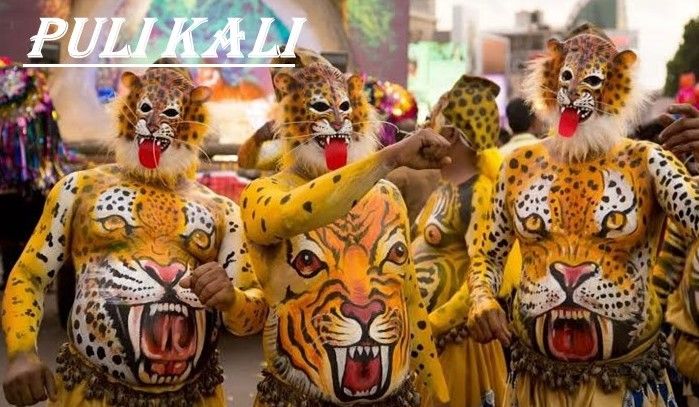
Puli Kali, a vibrant folk art of Kerala, is one of the most colorful and energetic traditions celebrated during Onam. Rooted in the Thrissur district, this festival is popularly known as the “tiger dance.” It is performed by groups called Pulikkali sangams, where dancers paint themselves as tigers and hunters, enacting lively jungle scenes. The performance takes place on the fourth day of Onam celebrations and attracts thousands of spectators from across India, making it one of the most iconic cultural events of the state.
Etymology of Puli Kali
The term Puli Kali literally means “play of the tigers.” In Malayalam, Pulirefers to a tiger or leopard, while Kalimeans play. The dance revolves around the theme of tiger hunting, symbolizing the raw energy of nature and the human spirit.
Historical Background
The origins of Puli Kali date back over 200 years. Maharaja Rama Varma Sakthan Thampuran, The Ruler of Cochin, is credited with introducing this art form to add vigor and entertainment to Onam festivities. Later, Muslim soldiers of the British Army stationed in Thrissur popularized the dance further, incorporating movements that mimicked the stalking of tigers by hunters. Initially known as Pulikkettikali, the performance gradually evolved into the grand spectacle witnessed today.
Makeup and Costume
The elaborate makeup and costume of the dancers is the most striking feature of Puli Kali. Preparing the tiger look is a meticulous process that takes five to seven hours. Dancers first remove body hair, then apply a base coat of paint made from tempera powder mixed with varnish or enamel. Once dried, tiger stripes and patterns are painted on. To complete the transformation, performers wear masks, cosmetic teeth, tongues, beards, and jingling belts around their waists. Interestingly, masks were not used in earlier times, giving the art form a raw authenticity.
Performance and Procession
By afternoon, the painted dancers parade through the streets of Thrissur, moving to the beats of traditional instruments like Udukku and Thakil. Their dance involves pouncing, belly shaking, and playful movements that depict tigers hunting prey or being chased by hunters. The troupes gather at Naduvilal in the Swaraj Round, near The Historic Vadakkunnathan Temple. Here, coconuts are offered to Lord Ganapati before the grand procession begins. Each troupe also brings floats representing their villages, competing for the most creative displays.
Modern-Day Celebrations
Over time, Puli Kali has become a platform for artistic expression. Renowned painters now contribute to the body art, elevating the visual appeal of the festival. The event has grown into a major tourist attraction, showcasing Kerala’s cultural richness and creativity. Today, Puli Kali is not confined to Onam alone; it is also performed during other festive occasions across the state, reflecting its enduring popularity.
Cultural Significance
Beyond its entertainment value, Puli Kali reflects Kerala’s cultural identity. It symbolizes the balance between man and nature, the hunter and the hunted, and the playful spirit of community celebration. The festival fosters unity, creativity, and pride in local traditions, making it an integral part of Kerala’s heritage.
Conclusion
Puli Kali in Thrissur is more than a dance—it is a living tradition that embodies Kerala’s festive spirit. With its roaring tigers, rhythmic beats, and joyous crowds, it transforms the city into a spectacle of energy and color. As an art form that has evolved over centuries, Puli Kali continues to captivate audiences, reminding them of the enduring bond between culture, tradition, and community.