
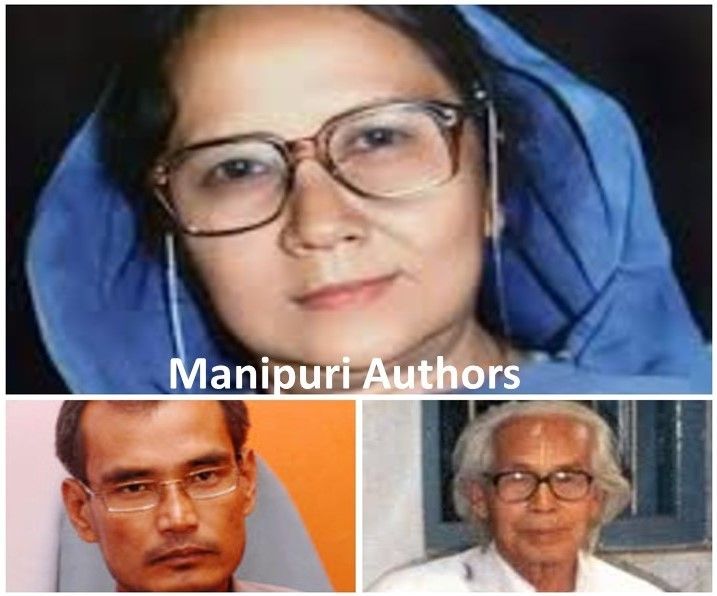
Indian literature is a rich tapestry woven from diverse languages, traditions, and cultures. Within this vast landscape, Manipuri authors have played a significant role, contributing works that reflect the cultural depth, historical legacy, and emotional resonance of Manipur. Their writings spanning novels, short stories, essays, plays, and translations form an essential part of India’s literary heritage and continue to inspire generations.
M. K. Binodini Devi
Maharaj Kumari Binodini Devi, a member of Manipur’s royal family, is regarded as one of the most versatile figures in Manipuri literature. Her creative output includes short stories, essays, novels, plays, screenplays, lyrics, and ballet scripts. Her novel Boro Saheb Ongbi Sanatombiis considered a landmark in Manipuri fiction, while her essay collection Maharaj Churchandgi Imung offers deeply personal memoirs. Binodini Devi also translated works of Rabindranath Tagore and other Bengali writers into Meitei, thereby bridging literary traditions. Beyond her writing, she was a sculptor and cultural icon, blending royal heritage with modern artistic sensibilities.
Ashangbam Minaketan Singh
Ashangbam Minaketan Singh is often hailed as the father of modern Meitei literature. His contributions span poetry, prose, essays, translations, mythology, biography, autobiography, and literary criticism. By experimenting with form and language, he laid the foundation for contemporary Manipuri literature and inspired future generations to explore new creative directions.
H. Guno Singh
H. Guno Singh is remembered as a prolific short story writer and translator. His works such as Aroiba Paodam, Khudol, Langjim Manghrabi Kishi, and Laman highlight his narrative skill. He also translated Sukumar Sen’s History of Bengali Literatureinto Manipuri, making important literary scholarship accessible to Manipuri readers.
Loitongbam Pacha Meetei
Loitongbam Pacha Meetei gained recognition as a novelist with his award-winning work Imphal Amasung Magi Esing Nungsitki Phibham(Imphal and its climatic condition), which won the Sahitya Akademi Award in 1973. His other works include Anouba Pao Ama, Thanil, Na Tathiba Ahal Ama, and Peegi Wari. Meetei’s writing often conveys deep human emotions, with sadness as a recurring motif. His manuscripts also reveal his talent in poetry and drama, showcasing his versatility.
Sudhir Naoroibam
Sudhir Naoroibam consolidated his place in Manipuri literature through short stories. His collection Leiye Khara Punsi Khara(1998) earned him the Sahitya Akademi Award in 2003. Earlier works like Yokchabi Bangladesh (1990) and Mei Changlaba Chek (1992) also reflect his literary prowess. Apart from writing, Naoroibam has contributed as an editor for the Manipuri daily Poknapham, shaping contemporary literary discourse.
Other Notable Authors
Manipuri literature is further enriched by writers such as Lamaban Kamal Singh, Hijam Anganghal Singh, and Saratchand Thiyam. Each of them has contributed significantly to the growth of Manipuri language and literature, ensuring its place in the broader Indian literary heritage.
Conclusion
The contributions of Manipuri authors highlight the richness of India’s literary diversity. From royal memoirs to modern short stories, from Translations to Original Novels, these writers have preserved the cultural essence of Manipur while engaging with universal human themes. Their works continue to inspire readers and writers alike, ensuring that Manipuri literature remains a vital part of India’s cultural and linguistic heritage.