
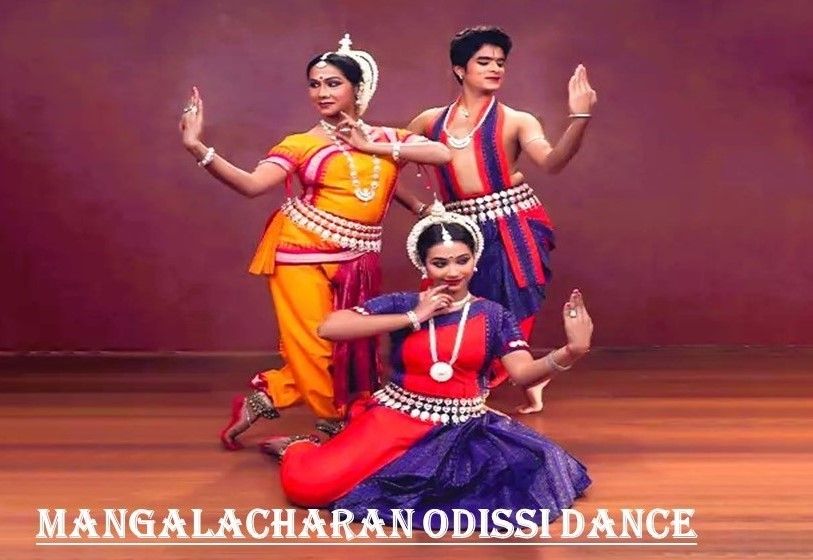
Odissi, one of India’s eight classical dance traditions, is admired for its elegance, spirituality, and expressive storytelling. Every Odissi performance Begins with Mangalacharan, an invocatory item that sanctifies the stage and prepares both dancer and audience for the artistic journey ahead. More than a dance sequence, Mangalacharan is a ritual of reverence an offering of movement, music, and prayer to the divine, the guru, the spectators, and the sacred performance space.
The Structure of Mangalacharan
Mangalacharan unfolds through a series of symbolic components, each imbued with spiritual depth:
- Sthai Bhangi (Tribhangi Pose): The dancer begins in the graceful tribhanga stance, holding flowers in Puspaputa hasta. This posture, with three bends at the head, torso, and knee, embodies balance, beauty, and devotion.
- Puspanjali: Flowers are offered to the Ranga Bhumi (performance stage). The dancer steps back and gently drops the flowers, acknowledging the sanctity of the space.
- Sama Sthanaka & Chauka Pose: After the offering, the dancer moves into Sama Sthanaka (a balanced stance) and then adopts the Chauka, a square-like posture symbolizing Lord Jagannath and stability in devotion.
Bhumi Pranam: Salutation to the Earth
A central element of Mangalacharan is Bhumi Pranam, the salutation to Mother Earth. The dancer kneels on the toes, touches the ground with both hands, and bows with the forehead. This gesture expresses humility and gratitude, recognizing the earth as the eternal foundation of all artistic expression.
Vandana: Invocation through Sloka
Following Bhumi Pranam, the dancer performs Vandana, the invocatory prayer. A Sanskrit slokais sung by the vocalist, while the dancer enacts its meaning through abhinaya (expressive gestures), hastas (hand movements), and bhavas (emotions).
- These slokas are traditionally dedicated to deities such as Lord Ganesha, Lord Shiva, Lord Krishna, Lord Jagannath, Goddess Durga, and Goddess Saraswati.
- Most often, the invocation is to Lord Ganesha, revered as the remover of obstacles and patron of the arts. Dancing itself is described as one of Ganesha’s divine attributes in these verses.
- During the chanting, the Mardala (traditional drum) remains silent, creating a serene devotional atmosphere.
Rhythmic Dance and Ukutas
Once the sloka concludes, the dancer resumes movement in sync with the Mardala. The drummer plays rhythmic syllables known as ukutas, sometimes reciting them aloud. These fixed patterns guide the dancer’s steps and elevate the spiritual energy of the performance.
Throughout this section, the dancer’s hands often remain in Anjali Hasta (gesture of offering). The performance concludes with three salutations:
1. To the Gods (above the head)
2. To the Guru (in front of the face)
3. To the Audience (at the chest level)
This triple salutation reflects Odissi’s holistic respect for divinity, teachers, and spectators.
Cultural and Spiritual Significance
Mangalacharan is far more than an introduction—it is the soul of Odissi. By combining ritual, rhythm, and reverence, it transforms the stage into a sacred space and bridges the earthly with the divine. It reminds us that classical dance is not merely performance but worship, where every gesture carries devotion.
In essence, Mangalacharan embodies The Philosophy of Odissi: spirituality expressed through beauty, discipline, and tradition. It is a timeless reminder that every performance begins with humility, respect, and prayer.