
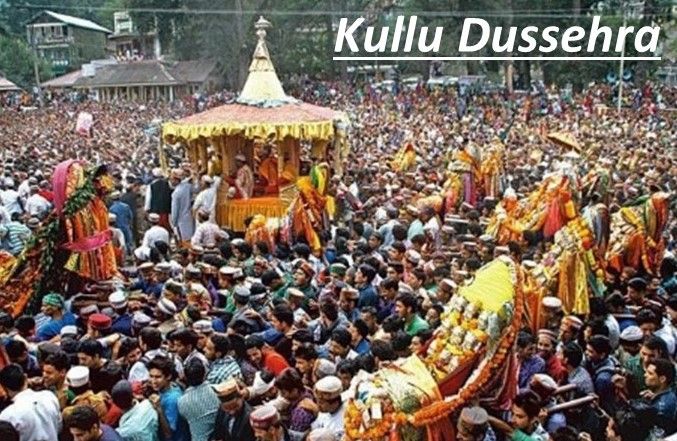
Kullu Dussehra is one of the most distinctive and colorful festivals of Himachal Pradesh. Unlike the conventional Dussehra celebrations across India, which conclude with the burning of Ravana’s effigy, Kullu Dussehra begins on Vijay Dashmi and continues for seven days. The grand festivities unfold at the Dhalpur Maidan in The Picturesque Kullu Valley, drawing thousands of devotees and tourists from across the globe.
Historical Background
The origins of Kullu Dussehra date back to the 17th century. King Jagat Singh of Kullu, burdened by guilt after persecuting a peasant named Durgadatta, sought redemption. On the advice of a Brahmin, he installed the idol of Lord Raghunath on his throne and declared him the ruling deity of the valley. Since then, Lord Raghunath has been worshipped as the presiding god of Kullu, and the festival is celebrated in his honor.
Recognizing its immense cultural importance, the Himachal Pradesh government has accorded Kullu Dussehra the status of an International Festival, attracting visitors from both India and abroad.
Mythological Legends
According to legend, Maharishi Jamdagni returned from Kailash carrying a basket of eighteen divine idols. While crossing the Chanderkhani Pass, a storm scattered these idols across the valley. The local people discovered them and began worshipping the deities, which became an integral part of Kullu’s spiritual tradition. This mythological tale explains why hundreds of village gods and goddesses are brought to Dhalpur Maidan during the festival, creating a divine congregation.
Medieval Legend
The medieval tale of Raja Jagat Singh adds another dimension to the festival. Misled by greed, the king demanded pearls from Durgadatta, who only possessed pearls of wisdom. In despair, Durgadatta sacrificed himself, cursing the king. To rid himself of the curse, Jagat Singh sought guidance from a Brahmin, who advised him to bring the idol of Lord Raghunath from Ayodhya.
The idol miraculously became heavy when carried back toward Ayodhya but light when taken toward Kullu, signifying Lord Raghunath’s wish to reside in the valley. Once installed, the curse was lifted, and Jagat Singh became the regent of Lord Raghunath. Since then, the idol is carried in a sacred chariot during Kullu Dussehra, symbolizing divine authority and blessing.
Celebration and Rituals
The festival is marked by colorful processions where hundreds of village deities are carried to Dhalpur Maidan. Accompanied by traditional music, dance, and rituals, the sight creates a mesmerizing atmosphere. Unlike other regions, effigies of Ravana are not burnt here. Instead, the focus is on devotion to Lord Raghunath and the unity of the valley’s gods.
Beyond its religious significance, Kullu Dussehra also features cultural performances, exhibitions, and fairs. Tourists are drawn not only to its spiritual essence but also to The Vibrant Display of Himachali Traditions, handicrafts, and folk art.
Conclusion
Kullu Dussehra is more than a festival; it is a living tradition that reflects the faith, culture, and history of Himachal Pradesh. Rooted in mythological and historical legends, it continues to unite people in devotion and celebration. Its recognition as an international festival highlights its global appeal, making it a must-experience event for anyone interested in India’s rich cultural tapestry.