
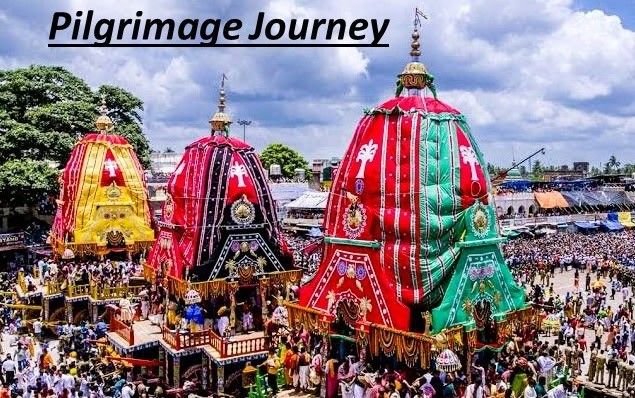
The Rath Yatra, or chariot festival of Lord Jagannath, is among the most revered celebrations in Hinduism. Held annually in Puri, Odisha, this grand event is not just a ritual but a vibrant spectacle of devotion, tradition, and collective participation. Millions of devotees and visitors gather to witness the divine journey, which symbolizes the eternal bond between humanity and the sacred.
Preparatory Rituals
The festival begins with A Series of Sacred Ceremonies that prepare both the deities and devotees for the auspicious journey:
- Mahasnan: A ceremonial bath of the deities, symbolizing purification and renewal.
- Festival of the Eye: Priests repaint the eyes of Lord Jagannath, Balabhadra, and Subhadra, breathing life into the divine images.
- Bandapana: Worship resumes, temple kitchens recommence cooking, signifying divine normalcy.
Though worship resumes, the deities remain outside the inner sanctum, awaiting their grand procession.
Commencement of the Car Festival
On Sukla Dvitiya, the second day of the bright fortnight, the Rath Yatra begins. Pilgrims first take a purification bath in the sea, symbolizing cleansing of body and soul. Returning to the temple, they witness Brahmins performing homa with Vedic chants. Sanctified water is sprinkled on the chariot platforms, which are beautifully decorated with colored cloths.
Sacred Images on the Chariots
Each chariot is adorned with nine sacred images, representing diverse aspects of divinity:
- Jagannath’s chariot: Depictions of Lord Krishna lifting Govardhan, Vishnu’s avatars, Hanuman, Narasimha, and Rama with Lakshmana.
- Balabhadra’s chariot: Images of Lord Ganesha, Shiva on his bull, Brahma with six faces, Vishnu on the serpent, and Balarama slaying a demon.
- Subhadra’s chariot: Fierce goddesses such as Kali, Chamundi, and Durga, symbolizing divine strength and protection.
These depictions embody benevolence and ferocity, creation and destruction, reflecting the vastness of Hindu spirituality.
The Grand Procession
The first image to be brought out is Sudarsana, which is circumambulated before being placed on Subhadra’s chariot. Then Balabhadra, Subhadra, and finally Lord Jagannath are carried out in a dramatic and emotional moment.
- Twenty temple servants carry the massive images adorned with flower head-dresses.
- Conch-shells, trumpets, and ceremonial umbrellas accompany the procession.
- Once placed on their respective chariots, ramps are removed, wooden horses are attached, and charioteers take their positions.
- With ropes fastened, devotees begin pulling the colossal chariots, chanting in unison.
Journey to Gundica Temple
Lord Jagannath’s chariot departs last, making A Symbolic Stop at the Mausima temple, where offerings are made. Eventually, the three deities reach the Gundica temple, their destination. Here, priests offer simple yet sacred food—flattened rice, grated coconut, and jaggery—signifying humility and devotion.
Spiritual Significance
The Rath Yatra is more than a physical procession; it represents the eternal movement of the divine among devotees. Its spiritual essence lies in:
- Inclusivity: People from all walks of life participate in pulling the chariots, symbolizing unity.
- Purification: Ritual baths and offerings emphasize cleansing of body and soul.
- Collective devotion: The festival embodies shared faith and joy in divine presence.
Beyond its religious significance, the Rath Yatra is also a major attraction for tourism, drawing millions of pilgrims and visitors worldwide. It stands as a cornerstone of Hindu tradition, blending spirituality, community, and cultural heritage.
Conclusion
In essence, the Pilgrimage Journey of Lord Jagannath is a celebration of devotion, unity, and divine presence. The Rath Yatra reminds humanity of the eternal bond between the sacred and the mortal, making it one of the most profound spiritual experiences in Hinduism.