
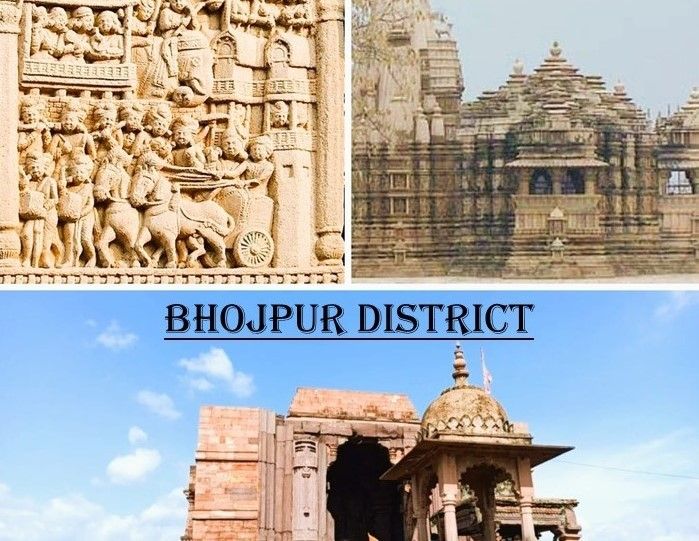
Introduction
Bhojpur District, located in the eastern Indian state of Bihar, is a region steeped in history, culture, and agricultural prosperity. With its administrative headquarters at Arrah (also spelled Ara), Bhojpur serves as a vital district in the state's governance and development framework. Covering an area of 2,474 square kilometers, the district is situated at an elevation of 192.989 meters above sea level. Geographically, it lies between 83°45′ to 84°45′ east longitudes and 25°10′ to 25°40′ north latitudes.
Bhojpur is strategically bordered by Chhapara and Ballia districts of Uttar Pradesh to the north, Rohtas District to the south, Patna, Jehanabad, and Uarwal districtsto the east, and Buxar Districtto the west. This location places Bhojpur at the crossroads of cultural and economic exchanges, making it a significant hub in Bihar’s landscape.
History of Bhojpur District
The Historical Narrative of Bhojpur is both rich and complex. Originally part of the larger Shahabad District, Bhojpur emerged as a separate administrative entity in 1972, following the bifurcation of Shahabad into Bhojpur and Rohtas. Later, in 1992, Buxar was carved out from Bhojpur, further refining its boundaries.
The name "Bhojpur" is believed to be derived from Raja Bhoj, a legendary ruler of the Paramara dynasty, known for his patronage of art, literature, and architecture. The region has long been associated with Rajput clans, particularly the Ujjainiyas, who migrated from central India and established dominance in the area.
Arrah, the district headquarters, has played a pivotal role in India’s freedom struggle. It was the site of the famous Siege of Arrah during the 1857 Revolt, where Veer Kunwar Singh, a local zamindar and freedom fighter, led a valiant resistance against British forces. His legacy remains deeply embedded in Bhojpur’s identity, with monuments and annual commemorations honoring his contributions.
Historically, Bhojpur was part of the Magadha Empire, and later came under the influence of Mauryanand Gupta rulers. While the region lacks prominent Buddhist relics, it has been home to various tribal and feudal powers, including the Cheros, before the rise of Rajput dominance.
Geography of Bhojpur District
Bhojpur’s geography is defined by its fertile plains, nourished by major rivers such as the Ganges, Sone, Chher, and Banas. These rivers not only support agriculture but also shape the district’s ecological and economic profile.
Key Features:
- Topography: Predominantly flat with rich alluvial soil, ideal for farming.
- Climate: The district experiences a tropical climate with hot summers, a monsoon season from June to September, and cool winters.
- Agriculture: Bhojpur is one of Bihar’s leading agricultural districts, known for high yields of wheat, rice, pulses, and sugarcane.
- Irrigation: Approximately 74.66% of the land is irrigated through canals, tube wells, and traditional systems like Ahars and Pynes.
- Administrative Divisions: The district comprises three sub-divisions—Arrah Sadar, Jagdishpur, and Piro—along with 14 development blocks and over 1,200 villages.
The district’s proximity to the Ganges and its fertile terrain make it a vital contributor to Bihar’s agrarian economy.
Demography of Bhojpur District
As per the 2011 Census, Bhojpur District has a population of 2,728,407, with a density of 1,139 people per square kilometer. The district is predominantly rural, with agriculture being the primary occupation.
Demographic Highlights:
- Rural vs Urban: About 2.33 million residents live in rural areas, while 389,861 reside in urban centers.
- Gender Ratio: The district has 907 females per 1,000 males, indicating a gender imbalance.
- Literacy Rate: At 72.79%, Bhojpur’s literacy rate is above the state average, reflecting improvements in education.
- Languages: Bhojpuri is the dominant language, spoken by over 92% of the population. Hindi and Urdu are also used for official and educational purposes.
- Social Composition: The population includes a mix of Rajputs, Brahmins, Yadavs, and Scheduled Castes, with SCs comprising 15.59% and STs 0.51% of the population.
Despite its cultural richness, Bhojpur was identified as one of India’s 250 most backward districts in 2006 and receives special funding under the Backward Regions Grant Fund Programme (BRGF) to support development.
Tourism in Bhojpur District
Bhojpur offers a compelling mix of historical landmarks, religious sites, and cultural experiences, making it a promising destination for travelers.
Notable Attractions:
- Veer Kunwar Singh Qila (Jagdishpur): A historic fort linked to the 1857 freedom movement.
- Aranya Devi Temple (Arrah): A revered temple dedicated to the goddess Aranya Devi.
- Sun Temple (Dev Village): Known for its ancient statues and spiritual significance.
- Shahi Masjid & Karbala Maidan: Islamic heritage sites reflecting the district’s religious diversity.
- Jain Sidhant Bhawan & Parswanath Mandir: Important pilgrimage centers for Jain devotees.
- Paihari Jee Ka Ashram: A tranquil spiritual retreat in Dhrampur village.
- Chaturvuj Narayan Mandir & Bhavani Mandir: Temples showcasing ancient architecture and local devotion.
- Lakar Sah Ki Mazar: A sacred site for the Muslim community.
Cultural Highlights:
- Bhojpuri Folk Music: The district is a cradle of Bhojpuri culture, with folk songs and dances that resonate across India and among diaspora communities.
- Festivals: Local festivals are celebrated with traditional music, dance, and cuisine, offering a vibrant cultural experience.
Travel Tips:
- Best Time to Visit: February to March offers pleasant weather for sightseeing.
- Accessibility: Arrah is well-connected by road and rail, with local transport options like buses and taxis.
- Entry Fees: Most tourist sites are open from 9 AM to 6 PM and have free entry.
Conclusion
Bhojpur District stands as a testament to Bihar’s historical depth, Cultural Richness, and agricultural vitality. From ancient dynasties and freedom fighters to spiritual sanctuaries and folk traditions, Bhojpur offers a multifaceted experience for visitors and residents alike. Whether you're a history enthusiast, a spiritual seeker, or a curious traveler, Bhojpur invites you to explore its stories, landscapes, and legacy.